

IK Multimedia
T-RackS CSR Plate Reverb
Couldn't load pickup availability
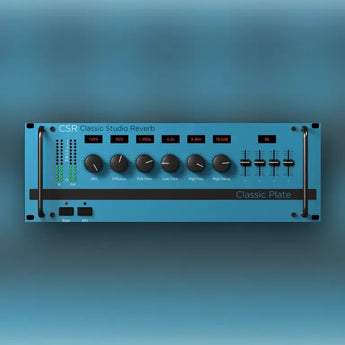
Classic Plate Reverb Processor
Plate reverberation first came out in the late 50's when an electromechanical transducer similar to a common speaker voice coil was coupled to a long metal foil (a plate) and a piezo pickup was wired at the other end. Running signal through the speaker would cause the metal plate to reverberate and the resulting sound picked up by the piezo transducer would be converted into electrical signal sent back to a mixing console to be mixed with the original dry signal.

The reverb time could be shortened by partially damping the metal plate with acoustical tiles, which would practically shorten the vibrating element, although never completely preventing it from resonating.
The wealth of controls on this module allows to custom tailor the reverb in all of its nuances, and as in all CSR reverbs the editing process can be simple, with just key parameters displayed, or advanced, for in depth tweaking.
Vocals and drums are among the most suitable candidates for this kind of reverb, but given its rich and diffuse sound it can be splashed on whatever source giving the mix 3D quality.
Used in mono it can reproduce the effect of the very first plate reverbs for a “vibey”
and vintage effect.
Windows
- Win 10+ (64bit)
- 4 GB RAM
- 4 cores CPU, 3.4 GHz (4.0 GHz Turbo-boost)
- 3GB free hard disk space
- OpenGL 2.0 compatible GPU
- ARM processors not supported on Windows
Apple
- Mac OS 11+
- 4 GB RAM
- 4 cores CPU, 3.4 GHz (4.0 GHz Turbo-boost) or M1 CPU
- 3GB free hard disk space
- OpenGL 2.0 compatible GPU
Recently viewed products
Describe your recently viewed products here


